

Table of Contents
- What Is Facial Fat Grafting and How Does It Work?
- Facial Fat Grafting vs. Dermal Fillers: A Detailed Comparison
- The Facial Fat Transfer Recovery Timeline: What to Expect Week by Week
- Longevity of Facial Fat Grafting Results: How Long Do They Really Last?
- Is Fat Grafting for Facial Volume Worth It? Weighing the Pros and Cons
- The Psychological Side of Facial Volume Restoration
- Conclusion: Making an Informed Decision
- Frequently Asked Questions
Last Updated: October 3, 2026
What Is Facial Fat Grafting and How Does It Work?
Facial fat grafting is a procedure that moves your own fat from one part of your body to another to restore lost facial volume. At Nova Skin Laser & Wellness, we explain it simply: fat is collected, cleaned, and placed back into the face to soften hollows and rebuild contours.
Fat grafting, also called autologous fat transfer, uses your own tissue. That makes it biocompatible, meaning your body recognizes it rather than fighting it. The goal is natural-looking volume restoration, not a frozen or filled appearance.
The Science Behind Autologous Fat Transfer
The process happens in three stages. First, fat is harvested from a donor site, often the abdomen or thighs, using gentle liposuction. Next, the fat is purified to keep healthy cells intact. Finally, it is placed into the face with a thin cannula.
Some of the transferred fat cells establish a blood supply and survive long term. Others are reabsorbed by the body. This is why fat resorption matters, and why a skilled hand plans for it.
Fat grafting uses your own tissue, so results tend to look and feel natural. But not every transferred cell survives, which is why planning for resorption is part of the process.
Facial Fat Grafting vs. Dermal Fillers: A Detailed Comparison
Fat grafting and dermal fillers both restore facial volume, but they work very differently. Fillers offer a quick, predictable result. Fat grafting aims for a longer-lasting change using your own cells.
Here is how the two compare:
| Feature | Fat Grafting | Dermal Fillers |
|---|---|---|
| Material | Your own fat | Hyaluronic acid or similar |
| Duration | Years, if fat survives | Months |
| Procedure | Harvest plus transfer | Injection only |
| Downtime | Longer | Minimal |
| Reversible | Hard to remove | Dissolvable |
| Best for | Lasting volume, contours | Quick touch-ups |
Hyaluronic acid fillers can be dissolved if you dislike the result. Fat cannot be undone as easily. That difference matters when you weigh the trade-offs.
If you want to test how added volume looks before committing, start with a dissolvable filler. Once you know you love the look, fat grafting becomes a more confident long-term choice.
The Facial Fat Transfer Recovery Timeline: What to Expect Week by Week
The facial fat transfer recovery timeline usually runs two to four weeks for most of the visible swelling to settle.
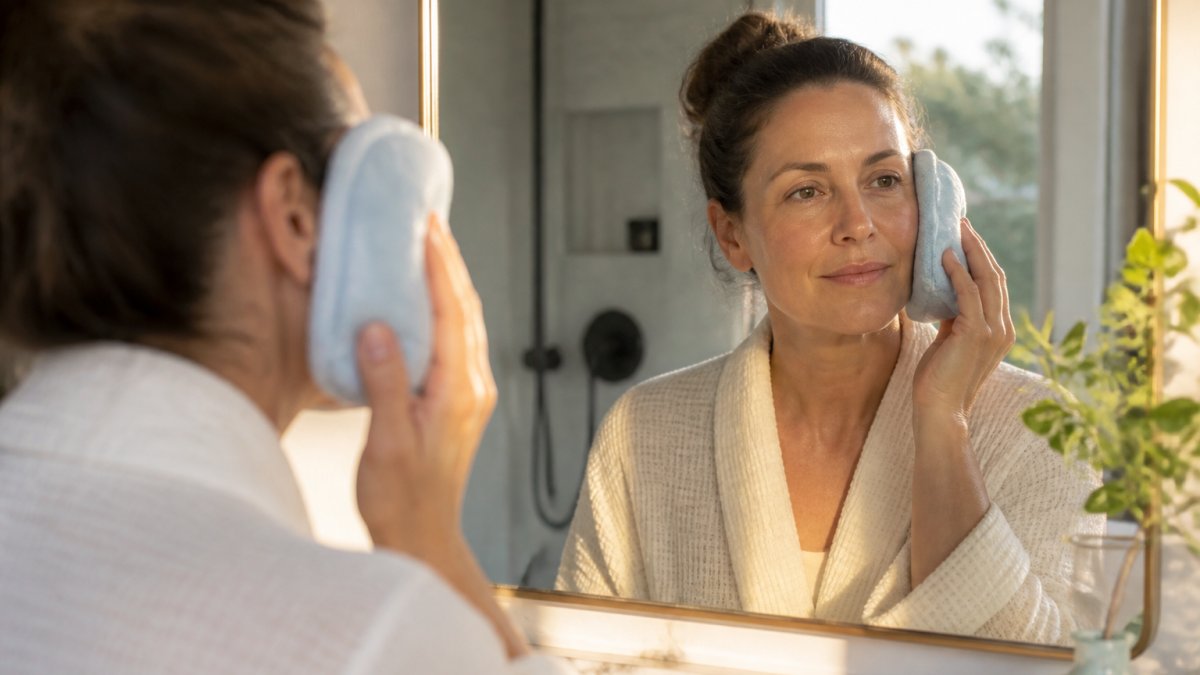
Here is a realistic week-by-week picture. Individual experiences vary with how much fat is placed, which donor site is used, and how your body handles swelling.
Days 1-3. Swelling peaks in this window.
Days 4-7. Swelling begins to ease but is still obvious. Bruising shifts through yellow and green as it fades.
Week 2. This is when most people feel comfortable in public again.
Weeks 3-4. The face begins to look more like the final result.
Months 2-6. This is the consolidation phase. Swelling is gone, and what remains is largely the fat that has taken up a blood supply.
A few practical notes that make the timeline easier:
- Plan the procedure around your calendar, not the other way around. Two weeks of low-key social time covers most of the visible recovery.
- Sleep elevated for the first week or two to help swelling resolve.
- Follow your aftercare instructions closely, they are written to protect the fat that is trying to establish itself.
- Skip strenuous exercise and saunas early on; both can increase swelling and, in theory, work against graft survival.
- Keep your weight steady. Significant swings in either direction can change facial contours while the graft is settling.
If you have an event on the calendar, work backward from it. Most people look camera-ready by the two-to-three-week mark, but the face continues to refine for several months after that.
Do not judge your final result in the first month. Swelling can mask how much fat will truly survive. Making decisions too early can lead to unnecessary worry.
For a general overview of what to expect after fat transfer procedures, the American Society of Plastic Surgeons patient information on fat transfer is a useful starting point. Read it in a new tab so you can come back to this timeline as you plan.
Longevity of Facial Fat Grafting Results: How Long Do They Really Last?
The longevity of facial fat grafting results depends on how much transferred fat survives. Fat that establishes a blood supply can last for years. Fat that does not gets reabsorbed, often within the first few months. While fat grafting relies on cellular integration for permanence, collagen facial treatments offer an alternative approach to addressing the structural laxity that often accompanies volume loss.
Understanding Fat Resorption Rates Over Time
Fat resorption is the body reabsorbing some of the transferred fat. It typically happens early, in the first three to six months. After that, the surviving fat tends to remain stable.
Several things affect how much fat survives:
- The technique used to harvest and purify the fat
- How gently the fat is placed into the face
- Your overall health and lifestyle habits
- The skill of the person performing the procedure
Lifestyle plays a real role. Big swings in weight can change facial contours, since fat cells respond to body weight changes. Steady weight and good skin care help protect your results.
Is Fat Grafting for Facial Volume Worth It? Weighing the Pros and Cons
Whether it is worth getting fat grafting for facial volume comes down to your goals, your tolerance for downtime, and how you feel about a result that is not fully reversible. For many people, the natural, lasting results outweigh the recovery period. For others, the trade-offs are not the right fit, and that is a legitimate answer too.
The pros:
- Uses your own tissue, so it is biocompatible and tends to look and feel natural rather than filled
- Can last for years once the transferred fat establishes a blood supply
- Softens hollows and restores mid-face volume in a way that moves with your face
- Addresses volume loss and contour together, not just one or the other
- No ongoing maintenance injections for the fat that survives
The cons:
- Longer recovery than a simple injectable appointment
- Some fat is reabsorbed, so results are not fully predictable
- Harder to reverse than a dissolvable filler
- Requires a skilled, experienced hand, technique strongly influences how much fat survives
- The final result is not fully visible for several months
The Part Most Articles Skip: What If You Are Not Happy?
This is the honest question worth asking before you commit. Fat grafting is not like a hyaluronic acid filler that can be dissolved in a single visit. Once fat has established a blood supply, it behaves like the rest of your body’s fat.
The practical takeaway is not that fat grafting is a bad choice. It is that the decision deserves more care up front than a reversible option does. A conservative first pass, placing less rather than more, is a common and sensible approach, because adding volume later is generally easier than taking it away.
How Lifestyle Affects Fat Survival
Not all of the transferred fat behaves the same way, and your habits play a role in how much sticks around.
- Weight stability. Fat cells respond to changes in body weight. Significant weight gain or loss after the procedure can change facial contours, because the grafted fat is now living tissue that participates in your body’s normal fat metabolism. Steady weight is the single most protective habit.
- Smoking. Smoking constricts blood vessels and impairs circulation, which is exactly what a newly grafted fat cell needs to establish a blood supply. Most practitioners advise stopping well before the procedure and staying off it through the early healing period.
- Nutrition and hydration. Good protein intake and hydration support healing. Extreme calorie restriction during recovery is not helpful to graft survival.
- Sun exposure and skin care. Protecting the skin does not change how much fat survives, but it does protect the overall quality of the result you are investing in.
The Psychological Side of the Decision
Feeling good about your appearance is a real part of the aging process, and it is worth taking seriously. Many people find that restoring facial volume helps them feel more confident.
Psychological readiness matters. Ask yourself whether you are doing this for you, whether you can handle the recovery period, and whether you are comfortable with a result that unfolds over months rather than days. A calm, informed mindset leads to better decisions.
At Nova Skin Laser & Wellness, every consultation is unhurried and private. Dr. Shahzad Shah, a board-certified physician, builds each plan and gives you a straight answer, including when no treatment is needed.
Adults who want natural-looking volume restoration, are willing to accept a short recovery period, and are comfortable with a result that refines over several months rather than appearing all at once.
For a broader look at how autologous fat transfer is used in facial rejuvenation, the American Society of Plastic Surgeons overview of fat transfer is a helpful reference. Open it in a new tab so this article stays available as you weigh your options.
The Psychological Side of Facial Volume Restoration
Feeling good about your appearance is a real part of the aging process, and it is worth taking seriously. Many people find that restoring facial volume helps them feel more confident. Others need time to adjust to a new look.
Psychological readiness matters. Ask yourself whether you are doing this for you, and whether you can handle the recovery period. A calm, informed mindset leads to better decisions.
At Nova Skin Laser & Wellness, every consultation is unhurried and private. Dr. Shahzad Shah, a board-certified physician, builds each plan and gives you a straight answer, including when no treatment is needed.
Adults who want natural-looking volume restoration and are willing to accept a short recovery period in exchange for longer-lasting results.
Conclusion: Making an Informed Decision
Deciding on facial volume restoration is a personal choice, and there is no single right answer. The key is understanding the trade-offs: natural, lasting results versus a longer recovery and some unpredictability.
If you want a physician-led plan built around your face, Nova Skin Laser & Wellness offers unhurried consultations, VISIA complexion imaging, and treatment plans explained by the doctor who builds them. Our EcoJet water-assisted liposuction with fat grafting uses local anesthesia, and every plan follows your condition, not a machine. If you would rather start with a reversible option, our lip filler treatments let you preview added volume before committing to something longer-lasting.
Frequently Asked Questions
How much does facial fat grafting cost?
The cost of facial fat grafting varies based on the number of areas treated, the technique used, and the provider’s expertise. Because it is a personalized procedure, a consultation is needed for an accurate quote. At Nova Skin Laser & Wellness, pricing is available on the website, and a consultation with Dr. Shah will provide a clear breakdown for your specific treatment plan.
Does fat come back after fat grafting?
Once transferred, the fat cells that survive the initial healing phase become a permanent part of your facial structure. However, some volume loss occurs during the first few months as non-viable cells are reabsorbed. The remaining fat cells can shrink or expand with significant weight changes, so maintaining a stable weight helps preserve your results long-term.
What are the pros and cons of facial fat grafting compared to facial fillers?
Fat grafting uses your own tissue, which is biocompatible and can provide a permanent, natural-looking result. It is also a two-in-one procedure if you need fat removed from another area. The main drawbacks are a longer recovery time, the unpredictability of fat survival, and the fact that it is a more involved procedure than dermal fillers. Fillers, on the other hand, are minimally invasive with no downtime but are temporary and require repeat treatments.
What factors determine if someone is a good candidate for facial fat grafting?
Ideal candidates are in good general health, have realistic expectations, and have enough donor fat available. Non-smokers tend to heal better and have higher fat survival rates. A consultation with a physician is essential to assess your facial anatomy, skin quality, and overall health to determine if fat grafting or another approach like dermal fillers is more suitable for your goals.
Aging changes facial volume, and choosing the right path takes honest guidance. At Nova Skin Laser & Wellness, Dr. Shahzad Shah builds every treatment plan himself, using VISIA complexion imaging and a concierge-level approach that puts your goals first. Book your consultation with Nova Skin Laser & Wellness to get a straight answer about whether fat grafting is right for you.